
Kazakhstan
Kazakhstan is the vast heart of Eurasia. Discover the fascinating contrast between futuristic metropolises, snow-capped peaks, and endless nomadic steppes. A safe and epic adventure full of untouched nature and limitless freedom!
📅 Best time to visit
About Kazakhstan
Kazakhstan: The Vast Heart of Eurasia and the Land of Limitless Horizons
Imagine a landscape so vast that the sky seems to touch the ground. A seemingly endless steppe where the wind sings the ancient song of nomads, while just a few hours' flight away, futuristic skyscrapers made of glass and steel pierce the heavens. Welcome to Kazakhstan, the ninth-largest country on Earth. It is a land that geographically stretches from the shores of the Caspian Sea to the snow-capped peaks of the Altai Mountains, seemingly uniting an entire continent within its borders.
Those who travel to Kazakhstan are not looking for the ordinary. They are seeking the epic. It is not a classic tourist destination with overcrowded beaches or well-trodden paths, and therein lies its invaluable worth. Kazakhstan is an absolute paradise for explorers, nature lovers, and anyone who wants to experience the genuine contrast between millennia-old traditions and rapid modernity. The touristic potential of this gigantic country is massive, untamed, and defined by a raw, breathtaking beauty.
Almaty: Where Metropolitan Flair Meets Snow-Capped Peaks
For most travelers, the Kazakh adventure begins in Almaty, the secret capital and cultural heart of the country. Unlike many Asian metropolises, Almaty is incredibly green. Broad boulevards lined with mature trees invite you to stroll, while cozy cafes sit seamlessly alongside modern art galleries. But the true highlight of Almaty is its backdrop: the city nestles directly against the majestic foothills of the Trans-Ili Alatau mountains.
No matter where you stand in Almaty, the snow-capped four-thousanders are always in view. A short cable car ride takes you from the city center straight up to Medeu, the highest outdoor ice-skating rink in the world, and further up into the Shymbulak ski resort. A mecca for winter sports enthusiasts in the colder months, the region transforms into a dream destination for hikers in the summer. Back in the city, a visit to the Green Bazaar (Zelyony Bazaar) is an absolute must. Here, fragrant spices, fresh flatbread, dried fruits, and mountains of apples are piled high—after all, the region around Almaty (which literally translates to "Grandfather of Apples") is considered the evolutionary birthplace of the apple. A stroll through Panfilov Park to the bright yellow Zenkov Cathedral, a massive wooden structure built entirely without a single nail, perfectly completes the picture of this charming metropolis.
Astana: A Futuristic Vision in the Middle of the Steppe
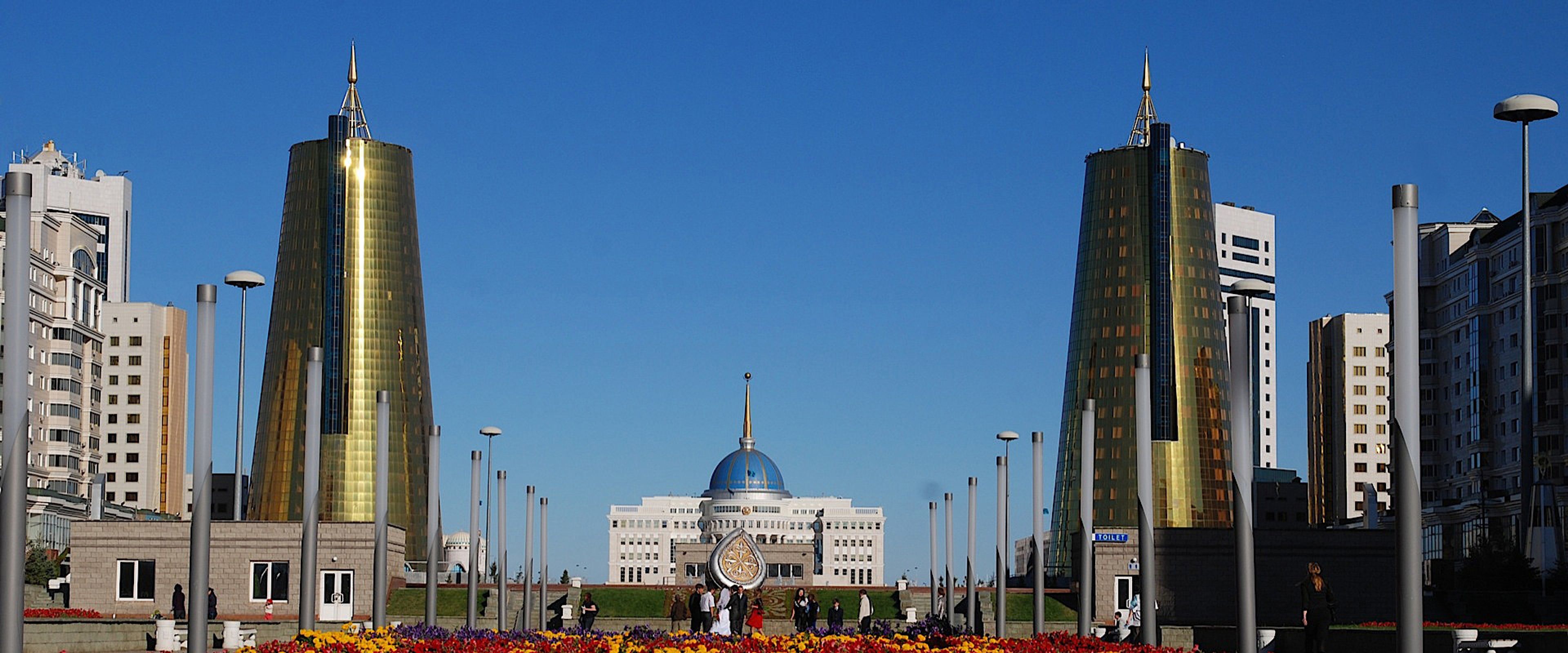
A sharper contrast to Almaty is hardly imaginable. Astana (temporarily known as Nur-Sultan), the capital located in the harsh north of the country, is a city born from the drawing board. Where just a few decades ago there was nothing but windswept steppe, a skyline now rises that easily brings to mind Dubai or a sci-fi movie set. Here, international star architects like Norman Foster have realized their wildest architectural dreams.
The undisputed symbol of the city is the Bayterek Tower. It symbolizes the mythical tree of life, in whose crown the magical bird Samruk laid a golden egg. From the observation deck inside the golden sphere, you can gaze out over a perfectly symmetrical cityscape. Another architectural marvel is the Khan Shatyr—a massive, transparent tent that houses an entire shopping mall, amusement rides, and even an artificial sandy beach with real palm trees imported from the Maldives. Astana is a monument to Kazakhstan's bold leap into the future, a place of superlatives that exudes a surreal fascination, especially at night when all the buildings glow in vibrant, shifting colors.
Natural Wonders in the Southeast: Canyons, Singing Dunes, and Sunken Forests
Once you leave the cities behind, Kazakhstan reveals its true, awe-inspiring scale. The southeast of the country, surrounding Almaty, is a concentrated hub of scenic wonders. An absolute highlight is Charyn Canyon. Often referred to as the "little brother of the Grand Canyon," the Charyn River winds its way through a deep red, orange, and ochre rock landscape here. In the so-called "Valley of Castles," bizarre rock towers sculpted over millennia by wind and water reach into the bright blue sky—a place of absolute, magical silence.
No less spectacular are the Kolsai Lakes, resting like dark sapphires embedded in dense coniferous forests. Just a short off-road drive away lies Lake Kaindy. After a massive earthquake over a century ago, a natural dam formed here, completely flooding a spruce forest. To this day, the dead, ghostly tree trunks jut out of the ice-cold, turquoise-blue water like pale spears. Another absolute must-see is the Altyn-Emel National Park. Here you will find the "Singing Dune"—a massive mountain of sand that, when swept by dry winds, produces a deep, humming sound highly reminiscent of a taking-off airplane. Within the same park lie the Aktau Mountains, whose chalk-white, red, and yellow striped patterns look as if a giant had painted them onto the landscape with a massive brush.
Mangystau: A Journey to Another Planet
For true adventurers, the path leads to the deep west of Kazakhstan, to the Mangyshlak Peninsula (Mangystau) on the shores of the Caspian Sea. This is one of the most fascinating and simultaneously least-traveled regions on Earth. Millions of years ago, this area formed the floor of the ancient Tethys Ocean. When the water finally vanished, it left behind a landscape that looks as if it simply doesn't belong on this planet.
The Bozzhyra Massif is the pinnacle of this extraterrestrial topography. Chalk-white, razor-sharp rock needles, deeply furrowed canyons, and endless, blindingly bright salt flats completely dominate the scene. When the setting sun bathes this inhospitable, chalk-white landscape in soft shades of pink and purple, you can truly feel the absolute isolation and majesty of nature. Mangystau is wild, hot, often dusty, and absolutely demands robust 4x4 vehicles—but the visual impressions you will gather here are beyond compare with anything else in the world.
The Legacy of the Nomads: Eagle Hunters and the Endless Expanse
To truly understand Kazakhstan, you must delve into its deep nomadic heritage. For centuries, the Kazakhs roamed the vast Eurasian steppes as equestrian nomads alongside their herds of sheep, camels, and horses. Even though the country is highly modern today, the nomadic soul remains deeply rooted in the Kazakh people.
A perfect symbol of this is the yurt (yurta). Even today, you can easily spot these round, felt-covered tents in the summer on the high mountain pastures (jailau). An encounter with modern nomads, who will almost certainly immediately invite you into their yurt for a cup of hot tea and sweets, is often the most defining and heartwarming experience of a trip. In the east of the country, in the rugged Altai region, one of the most fascinating traditions is also kept fiercely alive: eagle hunting. In the dead of winter, the "berkutchi" hunt foxes and hares from horseback using massive, highly trained golden eagles. To witness this deep, respectful bond between human, horse, and bird of prey in the freezing winter landscape is an unforgettable privilege.
Kazakh Cuisine: A Feast of Hospitality
As with all nomadic cultures, food plays a deeply central role in hospitality. In Kazakhstan, you are not simply served a meal; you are celebrated. The cuisine is hearty, meat-heavy, and specifically designed to provide energy for the harsh life on the steppe. The ultimate national dish is "Beshbarmak," which literally translates to "five fingers"—because it is traditionally eaten with the hands. It consists of tenderly boiled horse or mutton meat served over wide, handmade noodles and drenched in a rich, savory onion broth.
A meal in Kazakhstan is fundamentally incomplete without "Baursak," small, deep-fried balls of dough that taste like savory doughnuts and are served alongside absolutely everything. A real challenge, but also a deep cultural experience for the palate, is "Kumys" (fermented mare's milk) or "Shubat" (fermented camel's milk). These slightly sour, effervescent drinks are considered the liquid gold of the steppe and are an essential part of every traditional feast.
Why Kazakhstan is the Ultimate Travel Destination of Tomorrow
Kazakhstan has long since stepped out of the shadows and is entirely ready for the global stage of tourism. The country is politically stable, highly safe, and incredibly hospitable. The infrastructure has made massive leaps forward in recent years. Modern domestic flights and an excellent network of high-speed trains (the "Talgo") make it incredibly easy to cover the enormous distances of this giant country quickly and comfortably.
Furthermore, Kazakhstan has become extremely accessible for travelers. Citizens from many countries—including the European Union, the UK, the US, and many others—no longer require a visa for tourist stays of up to 30 days. The best times to travel to most regions are late spring (May and June) and early autumn (September and October). During these months, the steppe is either vibrantly blooming or draped in warm autumn colors, allowing you to perfectly avoid the extreme temperatures of midsummer and the notoriously harsh Kazakh winter.
Your Kazakh Adventure Begins
Kazakhstan is not a country you simply "check off" a bucket list. It is a country that demands space—space in your heart and space in your mind. It is the raw thrill of navigating through white canyons in a 4x4, the feeling of absolute, unbridled freedom while riding horseback across the endless steppe, and the sheer wonder at the seamless contrast between futuristic metropolises and millennia-old traditions. Those who are ready to embrace the unexpected will find an adventure in Kazakhstan that resonates long after they have returned home. The steppe is calling—are you ready for the great wide open?
🧳 Travel Essentials
Everything for your perfect Central Asia trip
* Affiliate links – we earn a small commission at no extra cost to you.
🧳 Reisen nach Kazakhstan
Usbekistan in 5 Tagen – zwischen Kuppeln, Karawanen und Kultur
Eine kompakte Zeitreise zu den magischen Oasenstädten der Seidenstraße
Usbekistan in einer Woche – ein Märchen aus 1001 Nacht
Usbekistan klassisch — Perlen der Seidenstraße
Usbekistan Reisen: Kultur, Natur & Seidenstraße
Tauchen Sie ein in den Zauber aus 1001 Nacht, entdecken Sie prachtvolle Oasenstädte und erleben Sie die unberührte Natur Zentralasiens aus der Perspektive lokaler Experten.
Usbekistan und Tadschikistan Reise
Tagestour zu den Sieben Seen von Tadschikistan
📋 Visum & Einreise
Bereit für Ihr Abenteuer in Kazakhstan?
Unser Team plant mit Ihnen die perfekte Reise — individuell, fundiert und maßgeschneidert.
Kontakt aufnehmen →