
Tajikistan
Tajikistan is the roof of the world. Experience the spectacular expanses of the Pamir Mountains, emerald-green alpine lakes, and deeply rooted Persian culture. The ultimate adventure for true explorers!
📅 Best time to visit
About Tajikistan
Tajikistan: The Roof of the World and the Rugged Soul of the Silk Road
Imagine a country that reaches straight for the heavens. A land with a topography so extreme that over 93 percent of its surface consists of craggy, majestic mountains, with more than half of the country sitting above the 3,000-meter mark. A place where the most formidable mountain ranges of Asia—the Pamir, the Hindu Kush, the Karakoram, and the Tien Shan—intertwine to form a colossal geological knot. Welcome to Tajikistan, the undisputed "Roof of the World" and one of our planet's last great, untamed adventures.
In contrast to its Turkic-influenced neighbors, Kazakhstan and Kyrgyzstan, a deeply Persian heart beats in Tajikistan. The language, the culture, and the profound rootedness in poetry and art historically bind the Tajiks closely to Iran and Afghanistan. Those who travel to Tajikistan dive into a world of fascinating, almost defiant beauty. This is no destination for mainstream tourists looking for perfectly paved highways and air-conditioned luxury buses. Tajikistan is a country for true explorers, road-trip enthusiasts, extreme trekkers, and travelers seeking absolute isolation, breathtaking altitudes, and a hospitality so profound and genuine that it alters you forever.
Dushanbe: The Relaxed "Monday" Metropolis
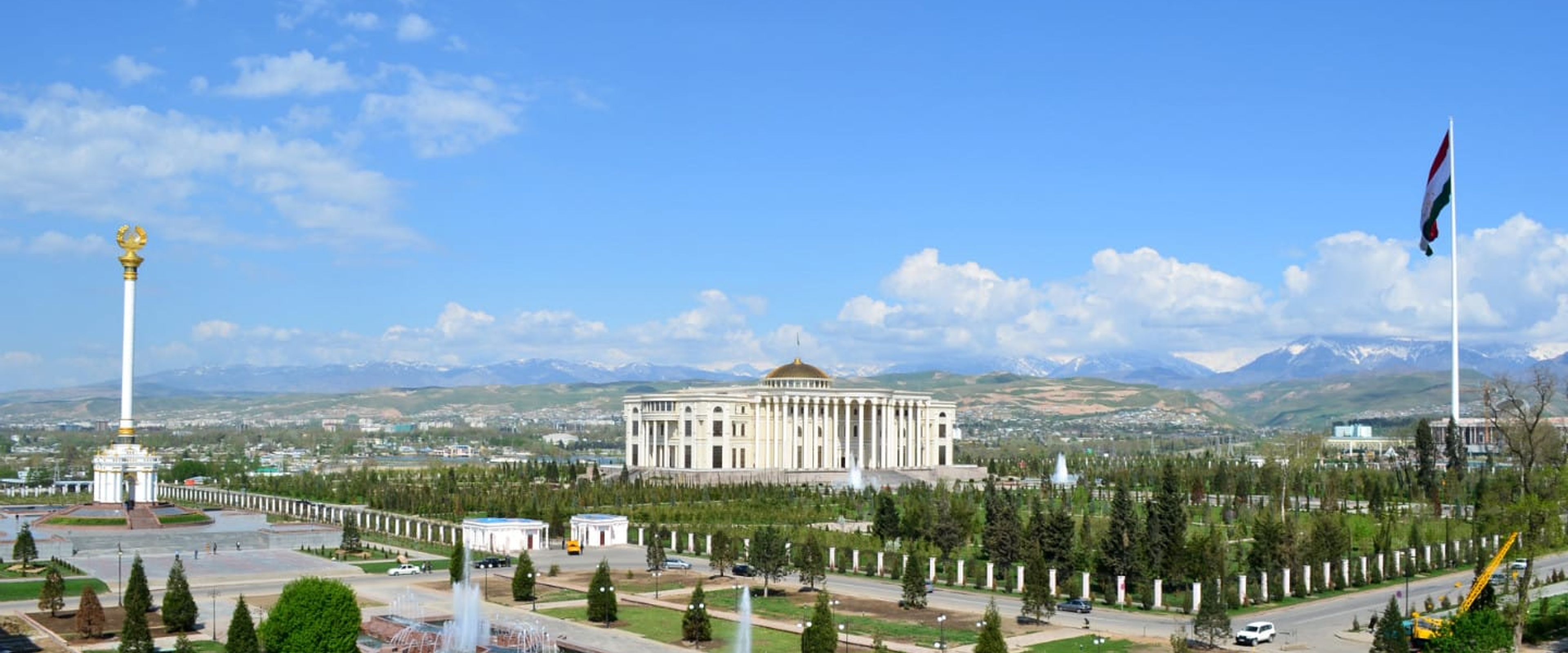
For most, the journey begins in the capital, Dushanbe. In Tajik, the city's name quite simply means "Monday"—a nod to the weekly bazaar that took place here centuries ago, from which the once-tiny village grew. Today, Dushanbe presents itself as a surprisingly green metropolis interwoven with broad, tree-lined boulevards, where neoclassical Soviet architecture meets magnificent, modern monumental buildings accented with oriental styling.
Dushanbe is the urban, laid-back heart of the country. A stroll through the sprawling Rudaki Park, named after the famous Persian poet, leads you past dancing fountains and blooming rose gardens to the gigantic 165-meter flagpole, which held the title of the world's tallest for years. The impressive National Museum offers a deep dive into the country's rich history, from Zoroastrian relics to Buddhist treasures. An absolute must-visit is the Chaikhana Rohat (Rohat Teahouse). In this splendid, open wooden pavilion with its elaborately painted Persian-style ceilings, old men wearing traditional tubeteikas (skullcaps) gather over green tea, play chess, and let time slip by. It is the perfect place to absorb the rhythmic pulse of the city before heading out into the rugged mountains.
The Fann Mountains: Emerald Lakes and Craggy Pinnacles
Just a few hours' drive northwest of Dushanbe rises a landscape that ranks among the most spectacular trekking regions in Central Asia: the Fann Mountains. For many alpinists and hikers, this region—with its razor-sharp peaks exceeding 5,000 meters and deeply carved valleys lined with juniper forests—is an absolute mecca. The colors here seem almost unnaturally intense; the stark contrast between the blinding white of the glaciers, the reddish rock, and the unbelievable turquoise of the alpine lakes burns itself indelibly into your memory.
The most famous of these lakes is Iskanderkul, named after Alexander the Great (Iskander), who is said to have rested here with his army. Resting at an altitude of over 2,100 meters, the lake shimmers in countless shades of blue and green depending on the light, dramatically framed by sheer rock walls. Equally stunning are the Alauddin Lakes and the Valley of the Seven Lakes (Haft Kul). Like a cascading waterfall of liquid gems, these seven alpine lakes tumble down through a narrow gorge, each boasting its own entirely unique, vibrant hue. In the Fann Mountains, you can hike from lake to lake for days, stay with local families in tiny, traditional villages, and experience the archaic lifestyle of the mountain farmers up close.
The Pamir Highway (M41): The Mother of All Road Trips
The centerpiece and undeniable touristic pinnacle of Tajikistan is the Pamir Highway—one of the most legendary, adventurous, and high-altitude highways in the world. Officially designated as the M41, this rough track winds from Dushanbe through the Gorno-Badakhshan Autonomous Region (GBAO) all the way to Osh in Kyrgyzstan. Taking on this route means embarking on a road trip of epic proportions that demands everything from both man and machine (robust 4x4 vehicles are an absolute necessity).
Leaving the lush green lowlands behind, you plunge into a lunar, unforgiving, yet simultaneously hypnotic high-altitude desert. The absolute highlight—and quite literally the high point—is crossing the Ak-Baital Pass. At 4,655 meters (15,272 feet), it is one of the highest navigable passes on Earth. The air here is thin, the wind howls relentlessly across the barren plateau, and the sense of isolation is absolute. Marmots scurry across the gravel tracks, and the flanks of gigantic glaciers glisten on the horizon. The Pamir Highway is not simply a route from A to B; it is a pilgrimage for adventurers, an immersion into extreme landscapes, and a test of physical limits.
The Wakhan Corridor: Where Ancient Empires Touched
An integral part of the Pamir journey, and often considered its most beautiful segment, is the detour through the Wakhan Valley (the Wakhan Corridor). Here, the raging, grey Panj River forms the natural border with Afghanistan. For days, the drive hugs the riverbank—often, only a few meters separate you from the Afghan shore, where you can watch people riding donkeys and working in small mud-brick villages. In the background, the snow-capped, 7,000-meter ice giants of the Afghan Hindu Kush pierce the flawlessly blue sky.
The Wakhan Valley was a crucial nexus of the ancient Silk Road. The remnants of massive mud-brick fortresses like Yamchun, which tower high above the valley, bear witness to an era when caravans were guarded and imperial borders defended here. Just above the Yamchun fortress spring the hot waters of Bibi Fatima—a magical place where you can bathe in crystal-clear, hot thermal water inside a natural stalactite cave. The Pamiris, the inhabitants of this extremely isolated high-mountain region, speak their own ancient languages and follow the Ismaili branch of Shia Islam. Their traditional homes (Chid) are filled with profound, millennia-old Zoroastrian and Islamic symbolism, and their hospitality is legendary. Being invited by a Pamiri family for tea, fresh bread, and apricot jam provides a warmth that makes you instantly forget the freezing temperatures outside.
Khujand and the Historical North
The north of Tajikistan, lying beyond the inhospitable high-mountain passes, forms a stark contrast to the rest of the country. The Sughd region around the city of Khujand is part of the fertile Fergana Valley. The climate here is milder, agriculture thrives, and the historical significance is immense. Situated on the banks of the great Syr Darya river, Khujand is one of the oldest cities in Central Asia. It was once conquered by Alexander the Great and refortified as "Alexandria Eschate" (Alexandria the Furthest).
The beating heart of Khujand is the Panjshanbe Bazaar, a masterpiece of Stalinist neoclassicism and one of the largest, most vibrant covered markets in Central Asia. Beneath the massive, colorful dome lies an intoxicating tangle of voices, scents, and colors. Female vendors in brilliant, traditional dresses offer mountains of pomegranates, juicy melons, fragrant spices, and golden-brown flatbread. For those interested in culture and history, the north provides deeper insights into Tajikistan's urban, ancient heritage and serves as the gateway to neighboring Uzbekistan.
Culinary Delights: The Persian Soul on a Plate
Tajik cuisine is hearty, grounded, and perfectly adapted to the harsh mountain climate, blending Central Asian traditions with delicate Persian flavors. The national dish par excellence is Qurutob. Traditionally served in a large wooden bowl and eaten communally with the hands, it consists of torn pieces of fatir (a flaky flatbread baked in butter), soaked in a sauce made from qurut (salty, dried yogurt balls) dissolved in water, and topped with sautéed onions, fresh herbs, and sometimes meat.
As everywhere in the region, the rice dish plov (osh) is an essential part of any festive table, prepared in giant cast-iron cauldrons (kazans) with lamb, carrots, and spices. The true center of social life, however, is the chaikhana (teahouse). Tea (green or black) is drunk continuously, always accompanied by fresh flatbread, sweet grapes, dried apricots, and the deep-seated conviction that a guest is a "gift from God." This mehmonnavozi (hospitality) is Tajikistan's true, priceless capital.
Why Tajikistan is the Ultimate Destination
Tajikistan is not for the faint of heart, but that is precisely what makes it so appealing in an increasingly over-developed world. It is one of the last great adventures, offering breathtaking nature, untouched history, and absolute authenticity. The country has opened up significantly in recent years; applying for an e-Visa (or even entering visa-free, depending on your nationality) has become much easier, and the network of homestays in the most remote mountain villages allows for ethical, direct contact with the local population.
Tajikistan demands respect, time, and the willingness to trade comfort for unforgettable experiences. Those who embrace the journey—breathing in the dust of the Pamir Highway, crossing vertigo-inducing passes, and feeling the deep silence on the shores of an emerald-green alpine lake—are not just traveling through a country. They are traveling to the very edge of the known world, deep into a fascinating, Persian mountain soul.
🧳 Travel Essentials
Everything for your perfect Central Asia trip
* Affiliate links – we earn a small commission at no extra cost to you.
🧳 Reisen nach Tajikistan
Usbekistan in 5 Tagen – zwischen Kuppeln, Karawanen und Kultur
Eine kompakte Zeitreise zu den magischen Oasenstädten der Seidenstraße
Usbekistan in einer Woche – ein Märchen aus 1001 Nacht
Usbekistan klassisch — Perlen der Seidenstraße
Usbekistan Reisen: Kultur, Natur & Seidenstraße
Tauchen Sie ein in den Zauber aus 1001 Nacht, entdecken Sie prachtvolle Oasenstädte und erleben Sie die unberührte Natur Zentralasiens aus der Perspektive lokaler Experten.
Usbekistan und Tadschikistan Reise
Tagestour zu den Sieben Seen von Tadschikistan
📋 Visum & Einreise
Bereit für Ihr Abenteuer in Tajikistan?
Unser Team plant mit Ihnen die perfekte Reise — individuell, fundiert und maßgeschneidert.
Kontakt aufnehmen →